Website security is one of the most important aspects of maintaining the integrity of your information, protecting your users, and ensuring the platform’s performance. Since WordPress is the most widely used CMS in the world, it is also one of the preferred targets for cyberattacks. That’s why adopting good security practices is essential.
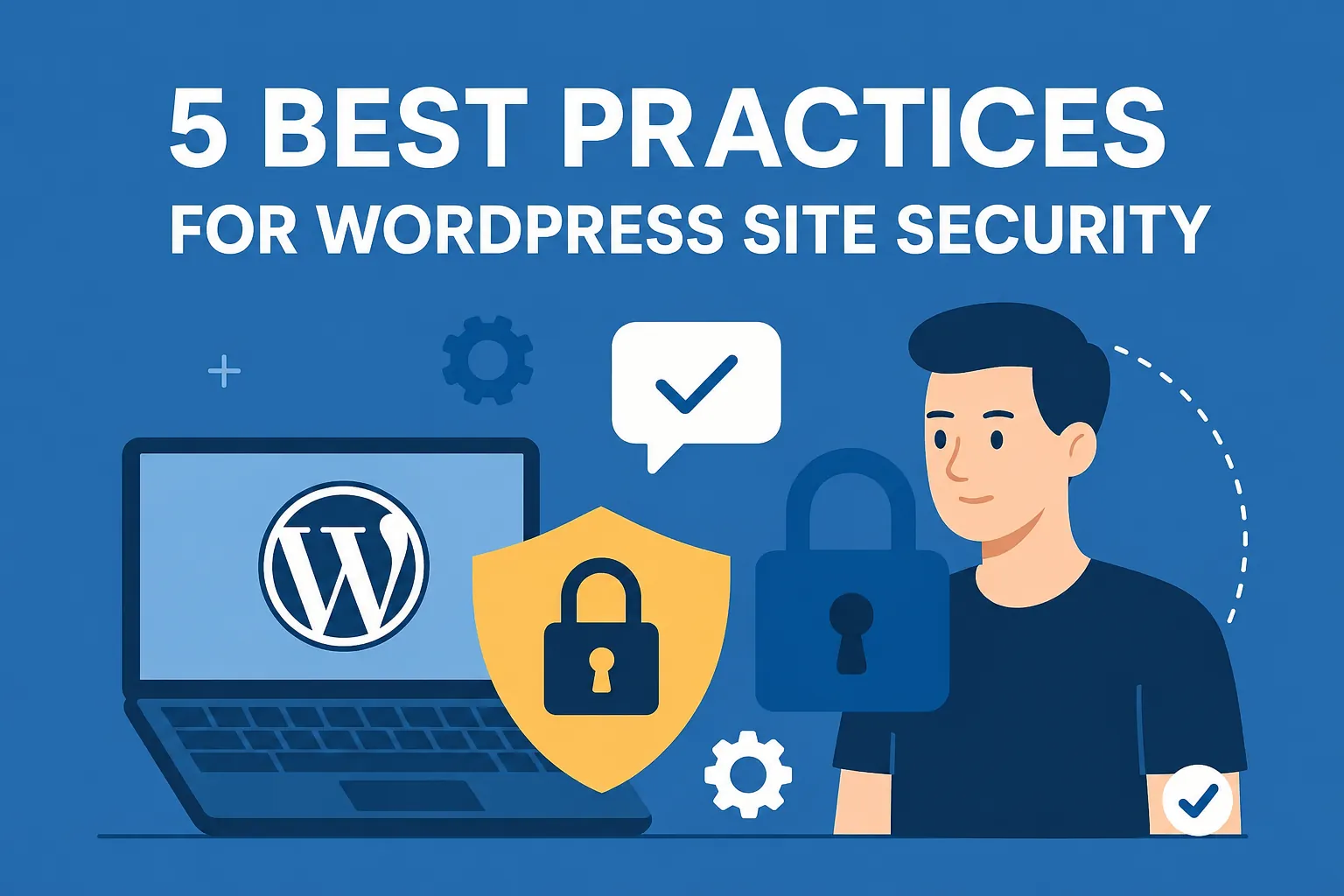
Here are 5 best security practices to keep your WordPress website protected:
1. Keep WordPress, Plugins, and Themes Up to Date
Updates provide not only new features, but also critical security fixes. An outdated plugin or theme can create vulnerabilities that attackers may exploit. Enable automatic updates whenever possible and regularly review your WordPress environment.
2. Use Strong Passwords and Two-Factor Authentication
Simple passwords can be easily compromised through brute-force attacks. Use strong, complex passwords that combine letters, numbers, and special characters. Additionally, enable two-factor authentication (2FA) to add an extra layer of security to the login process.
3. Restrict Access to the Administration Dashboard
Limit login attempts, change the default wp-admin URL, and restrict access by IP whenever possible. This makes it more difficult for bots and attackers to access the administration dashboard through automated methods.
4. Perform Regular Website Backups
Backups are essential for quickly restoring your website in the event of a security breach or system failure. Set up automated backup routines and store copies in external locations, such as cloud services like AWS, Google Drive, Wasabi, and others.
5. Install a Trusted Security Plugin
Security plugins such as Wordfence, iThemes Security, or Sucuri offer real-time monitoring, firewalls, malware protection, and detailed reports on suspicious activity.
WordPress security should always be a priority. With a few simple measures, you can significantly reduce the risk of attacks and keep your website stable and reliable. Remember: prevention is always better than remediation.